Our Lord in the Attic
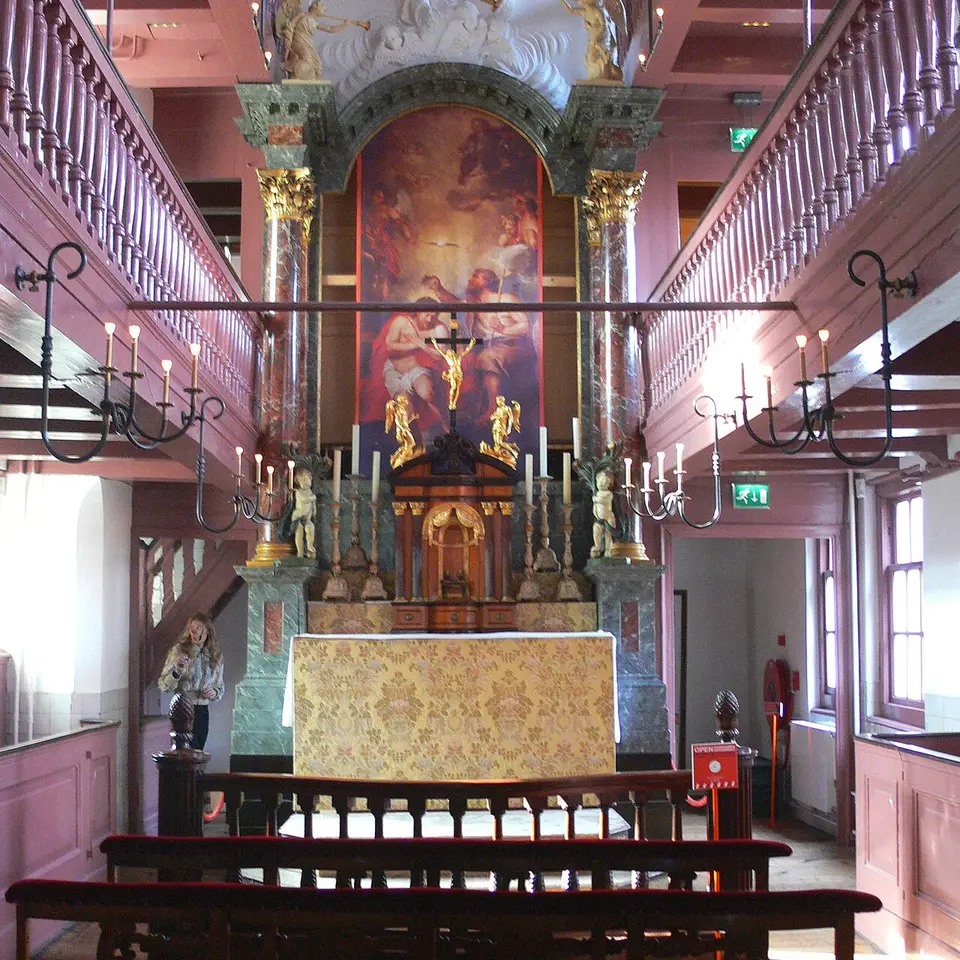
Our Lord in the Attic is a 17th-century canal house with a complete Catholic church hidden in its top floors. It was built in the 1660s, when Catholics in Amsterdam were forbidden to worship in public, and has been a museum since 1888.
From the canal this is one more merchant’s house. Behind the top three rows of windows there is a church with an altar, an organ and two galleries.
In 1578 Amsterdam became a Protestant city. Catholic churches were taken over, and Catholic worship in public was banned. But Amsterdam lived on trade, and trade does not go well with persecution. So the city settled on an arrangement that suited it: Catholics could hold Mass as long as nobody could see a church from the street.
Jan Hartman was a Catholic merchant who had done well in Amsterdam. In 1661 he bought this house on the canal and the two smaller houses behind it, and over the next two years he joined their attics into one long room. He cut away floors to make height for galleries, and put a church for about 150 people on top of his own home.
Everyone knew. On Sundays a stream of worshippers went in through a side door in the alley and climbed the stairs. The authorities knew too, and were content, because the rule was never really about what people believed. It was about what the city looked like.
The attic stayed in use for more than two hundred years. In 1887 a large new Catholic church opened near the station, and this one was saved from demolition by a group of Amsterdam Catholics who turned it into a museum the following year. Apart from the Rijksmuseum, no museum in the city is older.
What to look for
What does not show
Look for any sign of a church from the canal side. There is none: no cross, no tower, no large window. That was the condition for its existence.
The alley
The narrow lane beside the house is where the congregation entered, out of sight of the main street.
Three houses, one roof
From the alley you can see the building runs much deeper than its front suggests. The church spans the canal house and both houses behind it.
Key facts
- Built
- 1661–1663
- Built for
- Jan Hartman, merchant
- Used as a church until
- 1887
- Museum since
- 1888
- Address
- Oudezijds Voorburgwal 38–40, Amsterdam Directions
Close by
The bigger picture
In Amsterdam? Lookstory tells you the story of whatever you’re standing in front of. Point your phone at it.
Open LookstorySources
The dates, names and figures on this page were checked against published references. These are the records for this place. The story is Lookstory’s own telling of them. Last updated October 2026.